Cruising can be the most relaxing and adventurous way to vacation with your family (or solo). Knowing what you need to step on board, what you need to enter and exit the the countries you are visiting and what you need in case of emergency is the most vital part of ensuring your safety, security and smooth sailing!
Bookmark this as a starting point for getting yourself organized and ready for your next vacation.
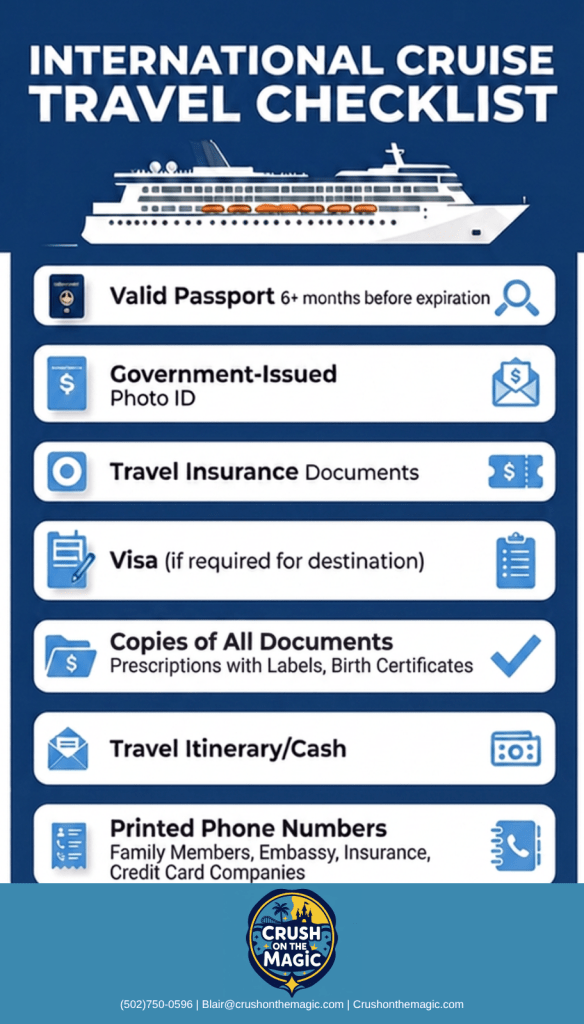
For closed loop cruises, meaning cruises in and out of a United States cruise port, does not *require* a United State Citizen to have a passport. Citizens are required to have at least a government issued birth certificate. While this is permitted, it can be tricky returning home in the event of an emergency as you may not be able to board a plane home without the passport. In this case, it is likely you will need to visit the US Embassy in the country you are trying to depart. You should also have a digital/physical copies of your documents with you during your travels in a safe place. Having someone at home with copies is beneficial as well as they can try to help you domestically. The cruise lines require you to submit digital copies of your documents, along with a passport style headshot photo, prior to your sailing for their records. This is how they record who is traveling on board with the local governments.
Make sure you are aware of the Visa and entry requirements if you are traveling abroad to board your ship or if if you ship is sailing outside of the United States. Registering with the United States Department of State’s STEP program is essential.
You should also familiarize yourself with your cruise line’s permitted and prohibited lists as well as for the countries you are traveling in the event you are disembarking abroad. Some prescriptions and products may be prohibited in those countries.
This may sound old school but how many phone numbers do you actually remember these days? My husband and I were recently chatting with out kids about rotary dial phones and payphones. He lived in the city where he often had to use a payphone to call home or friends when he was going to and from friends and family (no cell phones!). He said he would carry a little slip of paper of all the phone numbers he needed in case he needed to place a call. Traveling international, or on a cruise, is no different than these old school habits of the 80’s and 90’s. You should have a written or printed copy of important phone numbers, such as insurance (medical and travel), credit card/bank companies, family and friends you may need to contact back home as well as government numbers you may need to cal (i.e. local Embassy’s, etc).
Another old school method I like to do is travel with electronic and printed copies of our plans. This helps in the event of no cell service or lagging service. There have been many times we have pulled these out to reference when we were in transition from place to place.
Lastly, always have a little cash on hand. In the Caribbean almost everyone accepts USD, Venmo/Paypal or Credit Card. I recommend having enough cash for tips and possible for a taxi in the event you needed one while in port.
Taking these slightly tedious but important prep steps prior to your departure can make any hiccup along the way easier to manage and solve.
In future articles we will discuss things you should pack and things you can leave at home!
If you are ready to go, contact me and let’s get planning!


Leave a Reply